
Here’s How to Ensure a Successful Property Viewing! Detailed Tips and a Checklist

1. Key Points for Viewing Properties

Property viewing, or "naiken" in Japanese, is the process of inspecting the interior of a property. Here, we'll explain the steps and methods to ensure a successful viewing.

 

1-1.Always Make an Appointment for the Initial Viewing

The typical process for viewing a property involves searching for desired properties on portal sites like SUUMO and then contacting the real estate agency. You should check via email or phone if the property is still available and if a viewing is possible, then make an appointment. While you can visit real estate agencies without an appointment, this approach can be inefficient as you won't know if the desired properties are available or how the agency will respond. Making an appointment ensures the agent can prepare and select properties that meet your criteria, leading to a more efficient viewing process.


1-2.Limit Viewings to 3-4 Properties in 2 Hours

While it's natural to want to see as many properties as possible for comparison, it's best to limit each viewing session to four properties. Viewing too many properties can be time-consuming for both you and the real estate agency. Each viewing typically takes about 10-15 minutes, so seeing four properties will take around 1.5 to 2 hours, including travel time. Moreover, good properties tend to be in high demand, so it's possible that others might apply for the property before you finish your viewings. Limiting the number of properties viewed to four ensures a compact and efficient viewing session. If you find a property you like, it's advisable to return to the agency to start the application process immediately.


1-3.Use the Real Estate Agency's Car, Public Transport, or Walk

For property viewings, the most common transportation method is to ride in the real estate agency's car. The advantages include faster travel times, less walking, and avoiding extreme weather conditions. However, using public transportation or walking allows you to see the actual route to the station and the surrounding environment. If you plan to view four properties, be prepared to walk a significant distance, so wearing comfortable sneakers is a must.

2.Checklist for What to Bring and Wear for Property Viewings

Let's go over what you need to bring and wear for a property viewing.
Please download the checklist from here >>


2-1.Mobile Phone (Camera, Compass, Level, Flashlight, Notes)

A mobile phone is incredibly useful during property viewings, serving multiple purposes:

  • ・Camera: Take photos for reference, but always ask for permission from the real estate agent first. Start with a photo of the property name and room number to avoid confusion later.
  • ・Compass: Use a compass app to check the direction the property faces.
  • ・Level: Ensure the floors and rooms are level.
  • ・Flashlight: Some properties may not have working lights or electricity, especially in the evening.
  • ・Notes: Keep notes of your impressions and important details.


2-2.Measuring Tape

Bring a measuring tape of at least 3 meters. While detailed measurements aren't necessary during the viewing, you should measure essential areas like the spaces for large appliances (refrigerators, washing machines).


2-3.Floor Plans

Having a copy of the floor plans is crucial for noting any changes or measurements. If the real estate agency doesn't provide one, request it before the viewing.


2-4.Writing Materials and Clipboard

A clipboard is handy for taking notes, and while it might be extra baggage, it makes note-taking much easier. Ask the real estate agency if they can provide one.


2-5.Slippers

Bring slippers, as some properties may not have been cleaned yet. Disposable slippers are recommended.


2-6.Comfortable Clothing

Wear clothes that are easy to move in and that you don't mind getting a bit dirty. You might be walking a lot, so sneakers are recommended. Women should consider wearing pants instead of skirts for ease of movement.

By following these guidelines and using the checklist, you'll be well-prepared for your property viewings and able to make the most of your time.

3.Key Points for Checking the Interior

3-1.First Impressions Matter: Don’t Waste Time on Unwanted Viewings

While there are approximately 60 points to check during a property viewing, the initial impression is crucial. If you immediately feel uncomfortable in a room, it's unlikely you'll want to live there for an extended period. However, to understand why a property didn't feel right, jot down at least three reasons. This will help refine your search for the next viewing.


3-2.Living Areas (15 Points)

  • 1.Cleaning Confirmation: Check if there are "cleaned" signs in the entrance and wet areas, indicating post-tenant maintenance.
  • 2.Fire and Gas Alarms: Ensure the property is equipped with fire and gas alarms, as legally required.
  • 3.Furniture Layout: Visualize if your furniture will fit. Single beds typically measure 97cm x 195cm, and semi-double beds measure 120cm x 195cm.
  • 4.Windows and Doors: Confirm that all windows and doors open and close properly.
  • 5.Sunlight: Check the direction of windows using a compass to confirm good sunlight. Different orientations have specific sunlight characteristics:
    1. ・East-facing: Good morning light.
    2. ・South-facing: Ample sunlight throughout the day.
    3. ・West-facing: Afternoon and evening light, but can be hot in summer.
    4. ・North-facing: Little to no direct sunlight, often colder in winter but generally cheaper.
  • 6.Level Floors: Use a leveling app to check if the floors are even.
  • 7.Views: Assess the view from windows for privacy and any undesirable sights.
  • 8.Noise Levels: Test for external and internal noise with windows closed.
  • 9.Smells: Detect any unpleasant odors such as tobacco, pets, or mold.
  • 10.Door Swing: Note the direction of door swings to avoid furniture layout issues.
  • 11.Damage: Check for pre-existing damage to floors and walls. Document any issues.
  • 12.Lighting: Verify the presence and condition of lights, and whether they are fixtures you cannot replace.
  • 13.Outlets and Ports: Check the number and placement of electrical outlets, TV ports, and LAN connections.
  • 14.Air Conditioner Age: Look for the manufacturing date on air conditioners. Units older than 10 years may be less efficient.
  • 15.Air Conditioner Installation: Confirm if additional air conditioners can be installed and if there's space for external units.


3-3.Kitchen (8 Points)

  • 1.Refrigerator Space: Ensure there’s enough room for your refrigerator, especially if it's larger than standard.
  • 2.Stove: Check the type (gas, IH, electric) and the number of burners.
  • 3.Sink Size: Ensure the sink is large enough for your needs.
  • 4.Counter Space: Confirm there’s sufficient space for food prep.
  • 5.Storage: Verify that kitchen storage is adequate for your utensils and appliances.
  • 6.Ventilation: Ensure the range hood is correctly positioned and functioning well.
  • 7.Outlets: Check for conveniently located power outlets for kitchen appliances.
  • 8.Drain Smells: Test the kitchen drain for any unpleasant odors.


3-4.Wet Areas (6 Points)

  • 1.Washing Machine Space: Measure the space for your washing machine, especially if it's a drum type.
  • 2.Sink Features: Confirm the sink meets your needs.
  • 3.Shower Pressure: Test the water pressure in the shower.
  • 4.Bath Features: Ensure the bath has necessary features for your needs.
  • 5.Toilet Features: Check for required features in the toilet.
  • 6.Drain Smells: Test for any unpleasant odors from the bathroom drains.


3-5.Entrance and Other Areas (4 Points)

  • 1.Shoe Storage: Check if the shoe storage fits your footwear, including high boots.
  • 2.Lighting: Ensure the entrance light is adequate and functional.
  • 3.Locks: Confirm the type of lock on the door for security reasons (single or double, regular or dimple key).
  • 4.Breaker Capacity: Check the amperage of the breaker to ensure it meets your power needs.


3-6.Balcony (4 Points)

  • 1.Roof: Check if the balcony has a roof to protect against rain.
  • 2.Drying Space: Ensure there’s adequate and secure space for drying clothes.
  • 3.Drainage: Verify if there’s a drainage outlet on the balcony.
  • 4.Bird Droppings: Look for signs of bird droppings, indicating a persistent problem.

4.Outdoor Inspection Points

4-1.Entrance (5 Points)

1.Is the building entrance clean?
The entrance represents the building. If it's cluttered with trash, it may indicate poor management and low tenant morale. Poorly managed buildings often respond slowly to equipment failures, impacting your living experience. Additionally, low tenant morale can lead to noise and other issues, making a clean entrance a crucial indicator of the property's overall condition.

2.Does the mailbox lock properly?
Most mailboxes have dial locks, but some require tenants to provide their own locks. Ensure the mailbox cannot be easily accessed by reaching inside.

3.Is there any trash around the mailbox area?
A mailbox area littered with flyers and advertisements suggests poor management and low tenant morale, similar to a cluttered entrance.

4.Are there any complaints posted on the bulletin board?
Check for complaints about noise, burglaries, or other issues. These postings provide a realistic view of current problems in the building.

5.Are necessary facilities like intercom and parcel lockers available?
Depending on your budget, confirm that essential facilities like intercom systems and parcel lockers are available.


4-2.Hallways (3 Points)

1.Are there concerns about external visibility in outdoor hallways?
If outdoor hallways lack translucent panels, they may be vulnerable to external views, posing a security risk, especially for women.

2.Are personal items left in the hallways?
Hallways are common areas, and leaving personal items there is prohibited. This can obstruct fire and emergency evacuation routes. Properties with items left in hallways likely have poor management and low tenant morale.

3.Are the hallway lights functioning?
Unlit hallways at night are dangerous and scary. Check the lighting to ensure proper management.


4-3.Garbage Disposal Area (3 Points)

1.Is there a dedicated garbage disposal area?
A dedicated area within the property is convenient as you don't need to carry your garbage to a distant site. Always confirm its location. If there isn't one, find out where you need to take your trash.

2.Are there designated days for garbage disposal?
Typically, garbage must be disposed of on specific days (e.g., burnable, non-burnable, and recyclable). However, well-managed buildings like condominiums often allow 24-hour disposal, which is very convenient.

3.Is the garbage area clean?
A dirty garbage area indicates poor management and low tenant morale, and it is unhygienic, increasing the risk of pests. Always check its cleanliness.


4-4.Bicycle Parking (4 Points)

1.Is there space available, and is there a cost?
Without a bicycle parking area, you can't park your bicycle. Ensure there is space available and check if there is a fee. If the property allows common area parking, verify where bicycles are parked. If they're in hallways, it can obstruct emergency evacuation and indicates poor management.

2.Is there a roof over the bicycle parking?
A roof prevents bicycle deterioration. For expensive bicycles like road bikes or electric bikes, this is essential.

3.Are bicycles parked neatly?
If bicycles are parked haphazardly without designated spaces, it may indicate poor management and low tenant morale.

4.Are there any unauthorized or abandoned bicycles?
Bicycles covered in dust or missing parts suggest unauthorized parking or abandonment, indicating poor management and tenant morale.

5.Points to Check in the Surrounding Environment

5-1.Route to the Station (2 Points)

1.Are there any hills?
Elevation changes are not visible on maps. The walking time indicated on floor plans is calculated at 80 meters per minute and does not account for hills. Ensure you check for any elevation changes on the route you’ll use daily after moving.

2.Is the route walkable at night?
This is crucial and can’t be verified if you visit by car. Especially for women, it’s essential to check if the route has sufficient pedestrian traffic, streetlights, and feels safe to walk alone at night. Before making a decision, it’s highly recommended to walk the route at least once.


5-2.Nearby Facilities (3 Points)

1.Is there a supermarket nearby?
Check if there is a nearby supermarket for daily shopping. Supermarkets are often used for bulk purchases, and carrying heavy items over a long distance can be inconvenient.

2.Is there a convenience store nearby?
A 24-hour convenience store is an essential infrastructure for modern living. Depending on your lifestyle, you might rely on convenience stores for your meals. Make sure to note the location and distance to the nearest convenience store.

3.Is there a shopping street nearby?
Shopping streets can reveal a lot about the charm of the neighborhood. Sometimes they are closer than you think! Check if there is a nearby shopping street.


5-3.Surrounding Environment (2 Points)

1.Are there any sources of loud noise nearby?
Ongoing or planned construction nearby can cause noise disturbances. This can only be confirmed by walking around the area. Large construction projects can last for years, so it’s crucial to check. Schools nearby may have bells and events like sports days that create noise. Nearby stores, fire stations, hospitals, major roads, and railways can also be sources of constant noise. Temples and shrines might also generate some noise. Ensure you can tolerate any potential noise before deciding.

2.Are there any sources of unpleasant odors nearby?
Major roads can produce exhaust fumes. Nearby rivers can sometimes emit odors. Restaurants in the vicinity can also generate smells. Make sure to check for any bothersome odors yourself.

6.Three Recommended Questions to Ask During a Viewing

When viewing a property with a real estate agent, it's helpful to get their insights in addition to your own observations. While they will provide explanations voluntarily, here are three effective questions to ask:

"What are the good and bad points of this property?"
Every property has its pros and cons. Ask the real estate agent directly. They might point out things you haven’t noticed. If the drawbacks aren’t a problem for you (or are tolerable), it could still be a good choice.

"When did this property become available for viewing?"
Knowing when the property started being available for viewings can be very telling. If it’s been available for a long time, there might be issues. Conversely, properties available for a long time might have more room for negotiation. This information is crucial for a successful property search.

"How would you suggest arranging furniture here?"
If the agent struggles to visualize the furniture arrangement, it could indicate poor layout. This question helps assess the usability of the floor plan.

7.What to Do After Viewing the Property

7-1. If You Didn’t Find a Good Property

If you didn’t find a suitable property, return to the office to review the properties you’ve seen. You might think, “I didn’t find anything I liked, so I just want to go home.” However, a review is necessary to adjust your requirements. The properties you viewed were chosen based on your initial criteria, and you saw the top options available. Searching with the same criteria will only yield properties that didn’t make the cut. Therefore, you need to reassess which criteria are essential and which can be flexible. If both you and the agent have more time, you might be able to schedule another round of viewings. If not, you can set a date for your next visit and use the time to find more suitable options. While switching to a new real estate agency is an option, it’s more efficient to continue with the current one rather than starting over. This efficiency is key to a successful property search.


7-2. If You Found a Good Property

If you found a property you like, go back to the office to start the application process. Popular properties often have high competition, and multiple applications can be common. Sometimes, it’s better to interrupt your viewing schedule and proceed with the application immediately. Discuss with your agent to make the best decision.

8.[Highly Important] The Best Days for Property Viewings

Up to this point, we’ve discussed various aspects of property viewings, but the most crucial point is the timing of your viewings. Based on a typical week for a real estate agency, here are the best days for viewings:

8-1.The Weekly Schedule of a Real Estate Agency

To understand the best days for viewings, let’s first look at a typical weekly schedule for a real estate agency. Many real estate agencies are closed on Wednesdays, so we’ll use a Thursday-start week for this explanation. Although some agencies are open year-round, most agencies handle properties from multiple listings, meaning they cannot show properties or process applications from agencies closed on Tuesdays and Wednesdays.

Thursday Friday Saturday Sunday Monday Tuesday Wednesday
Property Research
Contract Preparation
Property Information Upload
Customer Preparation
Viewings
Application Process
Viewings
Application Process
Contract
Application Review Closed Closed

Viewings are concentrated on weekends, as most people are off. Agencies register new property information on platforms like SUUMO in preparation for weekend viewings, which takes about one to two days. Therefore, by Friday afternoon, weekend property information is usually available. The week generally progresses as follows: viewings over the weekend, applications on Monday, review on Thursday, and contracts by the following weekend.

Best Viewing Days
1st Place: Friday Afternoon
The best time for viewings is Friday afternoon because you can view newly listed properties before the weekend crowd. You might need to take a half-day off work, but the office will be less busy, allowing you to thoroughly examine good properties.
2nd Place: Early Saturday Morning
If taking time off work is difficult, aim for early Saturday morning before other clients start their viewings. Properties you like are likely to be liked by others too, and applications are generally processed on a first-come, first-served basis. Try to wake up early and secure your spot in the morning.
3rd Place: Monday Afternoon
Monday afternoon is the third-best time. This might seem surprising, but it's because some weekend applications may be canceled or rejected, making properties available again on Monday. You can search in real-time and catch these opportunities.

9.Recommended Real Estate Agencies

Finally, let’s discuss recommended real estate agencies. Here’s one key point: choose an agency near the property you’re interested in. Efficiency and speed are crucial when viewing properties. An agency close to the property will minimize travel time, allowing you to view more properties quickly. Additionally, local agencies have extensive knowledge about the neighborhood, including recommended shops and lifestyle information, which helps you imagine living there. They can also provide support if you encounter any issues after moving in. While there are many factors to consider when choosing an agency, start with one near your desired property. Give it a try!


How much space is needed for a washing machine space? What should I pay attention to during a viewing?

How much space is needed for a washing machine space? What should I pay attention to during a viewing?

There are many things I don't understand regarding the washing machine space in a rental property. With the increasing popularity of drum-type washing machines, the size of the washing machine space has become one of the important points to consider when searching for a property. In this article, we summarize the types and sizes of washing machine space and the waterproof tray for washing machines whose purpose may not be clear, and points to be mindful of during property viewings. We hope this will assist you in making your new living arrangements more comfortable.

1.Types and Sizes of Washing Machine Space in Rental Properties

First, let's summarize the types and sizes of washing machine space in rental properties. Depending on the type of washing machine, there may be cases where you don't need to be overly concerned, but there are also cases where precise measurements are necessary, so caution is required.


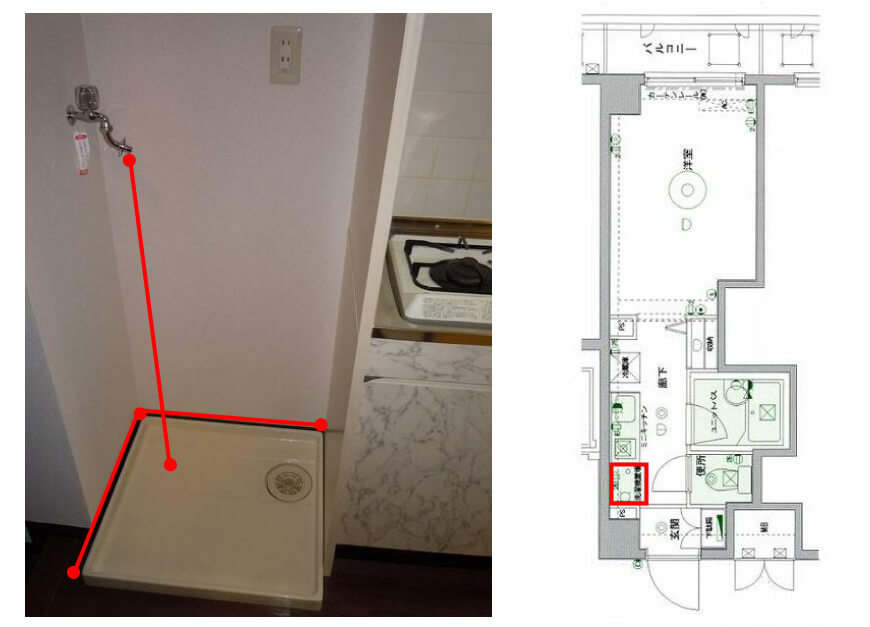
(1) Washing Machine Space in Rental Properties: Enclosed on Both Sides (Next to the Kitchen)


Most one-room/1K types without a laundry area have a washing machine space next to the kitchen surrounded by walls on both sides. In this type, the width is limited, requiring attention when purchasing or moving in a washing machine. Additionally, the height to the water supply inlet is often installed in a tight space, so caution is needed regarding height.

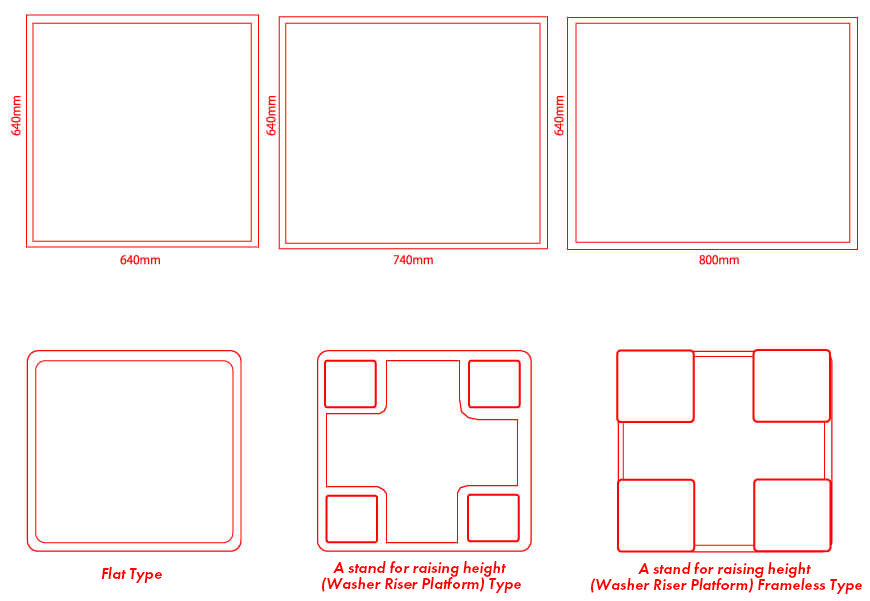
For this type of washing machine space, waterproof tray with dimensions of 640mm x 640mm (internal dimensions 586mm x 586mm) are common, and due to height constraints, it's often challenging to accommodate drum-type washing machines, requiring careful consideration.


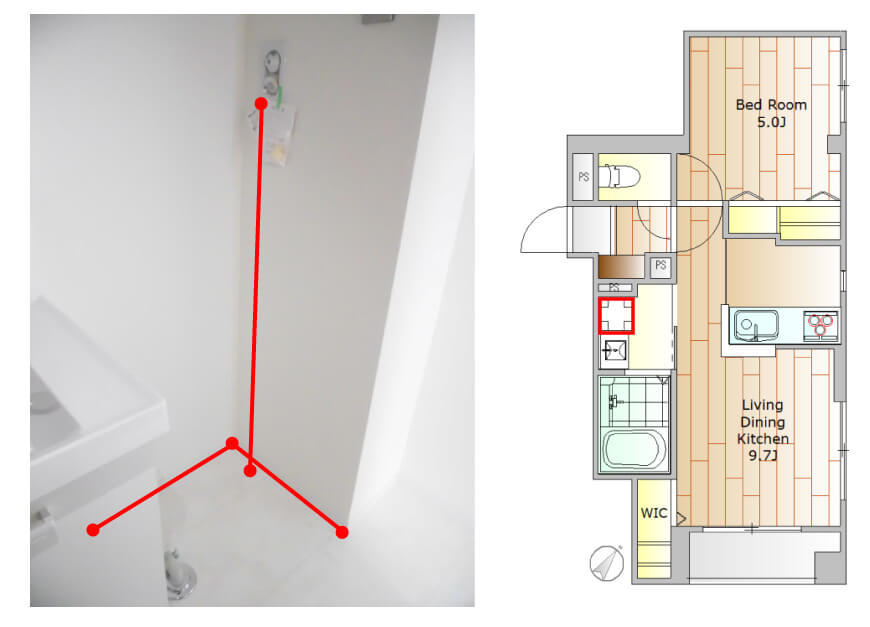
(2) Washing Machine Space in Rental Properties: Enclosed on Both Sides (Next to the Sink)


Most properties with a laundry area have a washing machine space next to the Sink. In this case, due to constraints imposed by the width of the sink and the wall, meticulous measurements of the width should be made. It's common for this space to be around 600mm wide, which may not accommodate a drum-type washing machine. Regarding height, since the water supply inlet is typically wall-mounted, there's usually no need for concern.

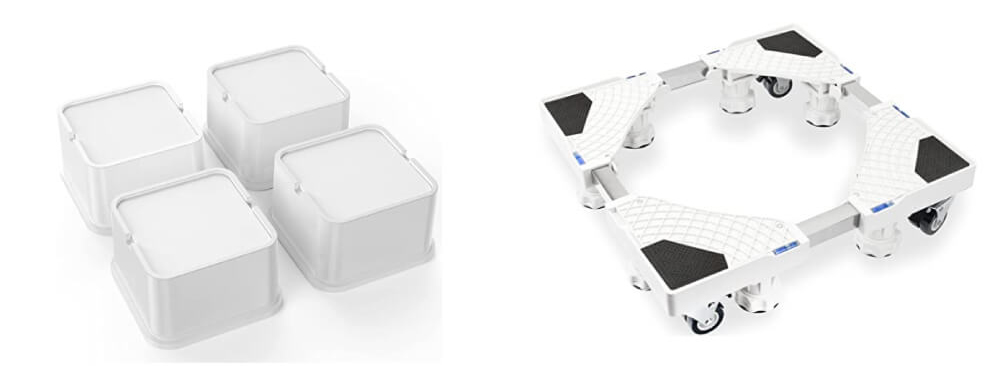
However, there's no waterproof tray installed in this washing machine space. You might feel concerned about this, but since a hose called an “elbow” is installed in the drainage outlet, there are generally no issues. However, depending on the washing machine, you may need to install a stand for raising height(Washer Riser Platform), so be cautious.

External link: Amazon Washer Riser Platform


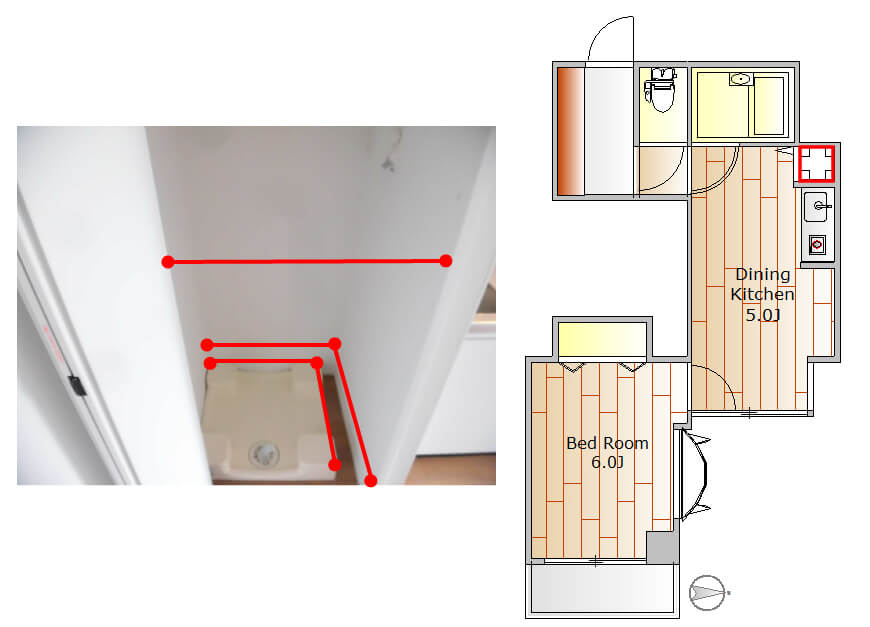
(3) Washing Machine Space in Rental Properties: Storage Type


In cases where the washing machine space is located within storage, the width and depth of the storage, along with the size of the waterproof tray, become important. Furthermore, since there are doors to the storage, if the depth exceeds a certain limit, the doors may not close properly. Additionally, the width may be constrained during installation due to the doors not fully opening.

Since this type of waterproof tray in this photo has high legs and is fixed, allowing only washing machines that fit within its dimensions to be placed. While the external dimensions are 640mm x 640mm, considering that washing machines typically require space between them and the wall, the waterproof tray being attached to the left wall may impose constraints. Although there's ample space width-wise within the storage, considering the interaction with the waterproof tray, so be cautious.


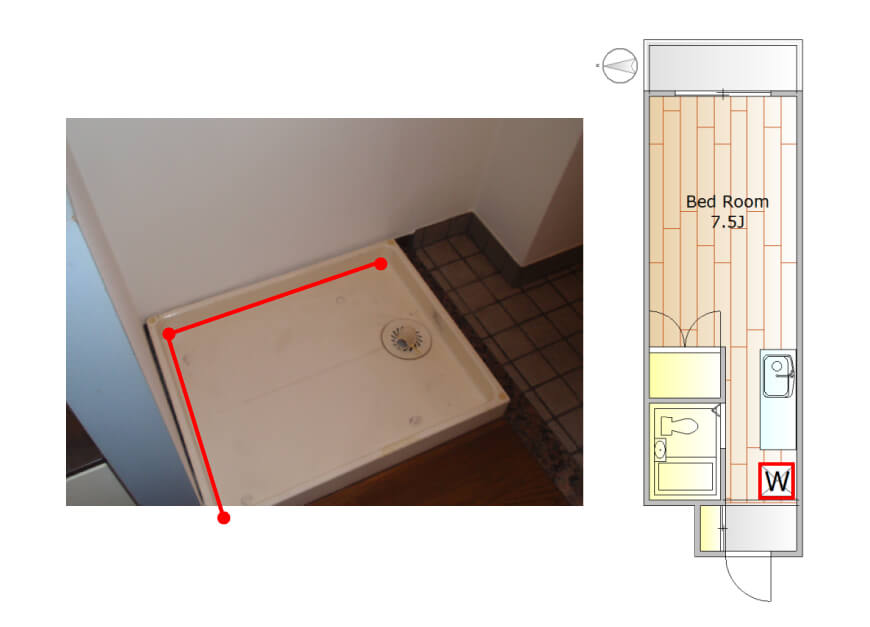
(4) Washing Machine Space in Rental Properties: Types with Ample Width


If there's ample width available, you can usually place a washing machine without many constraints. By measuring the internal dimensions of the washing machine space and being mindful of the height of the water supply inlet, you should be able to install the washing machine without issues. If additional height is required when connecting the hose to the elbow, consider installing a stand for raising height (Washer Riser Platform).

External link: Amazon Washer Riser Platform

2.Washing Machine Space in Rental Properties: Role and Size of Waterproof tray

We've discussed the types of washing machine space, and we noticed that some properties have Waterproof tray while others don't. But what exactly is the role of a Waterproof tray?


(1) Role of Waterproof tray

The waterproof tray serves three main purposes:

① Preventing leaks and condensation
As the name suggests, the primary role of a waterproof tray is waterproofing. Even in cases of minor leaks or condensation dripping, having a it can prevent floor corrosion. However, it cannot contain massive water leaks overflowing from the waterproof tray.

② Reducing washing machine vibration and noise
Washing machines can generate significant vibrations during operation. If a washing machine is directly placed on the floor, these vibrations may resonate through the floor to the lower levels. Placing a waterproof tray can absorb vibrations, reducing shaking and noise.

③ Facilitating cleaning and maintenance between the washing machine and the floor
Depending on the type, placing a waterproof tray can make it easier to clean and maintain the space between the washing machine and the floor. Particularly with riser-type pans, cleaning becomes more manageable, and connecting to the drainage outlet or elbow becomes easier.


(2) Size of Waterproof tray

There are standard specifications for the size of washing machine waterproof trays, and they generally come in three types. Let's review their characteristics:

① Standard dimensions of waterproof trays
The waterproof trays come in three standard dimensions: (a) 640mm × 640mm, (b) 740mm × 640mm, and (c) 800mm × 640mm.

② Types of waterproof trays
The waterproof trays come in three types: (a) Flat Type, (b) Riser Type, and (c) Riser Frameless Type.

(a) Flat Type
The flat type is a conventional waterproof tray with a reservoir for collecting leaks. It emphasizes preventing water leaks, allowing compatibility with various washing machine types. However, its lack of space between the washing machine and the floor may make cleaning difficult.

(b) A stand for raising height (Washer Riser Platform) Type
Riser-type pans have elevated corners and a depressed center, making them easier to clean. They offer better cleaning accessibility than flat types. However, due to the elevation, they may affect the height to the water supply inlet, requiring attention.

(c) A stand for raising height (Washer Riser Platform) Frameless Type
The riser frameless type has elevated corners without a frame (or with a low frame), making it the easiest to clean. Additionally, its lack of a frame allows for placement in tight spaces or provides flexibility in width, minimizing the impact of the waterproof tray when accommodating drum-type washing machines.

3.Sizing of Washing Machine Space in Rental Properties: Points to Note During Measurement

Let's explain the points to consider when measuring washing machine space in rental properties.


(1) Checking the size of the washing machine

Firstly, it's essential to grasp the dimensions of your washing machine. If you're bringing your existing machine, consult the manual for its size. If you've lost the manual, you might find the information on the manufacturer's website by searching for the model number.

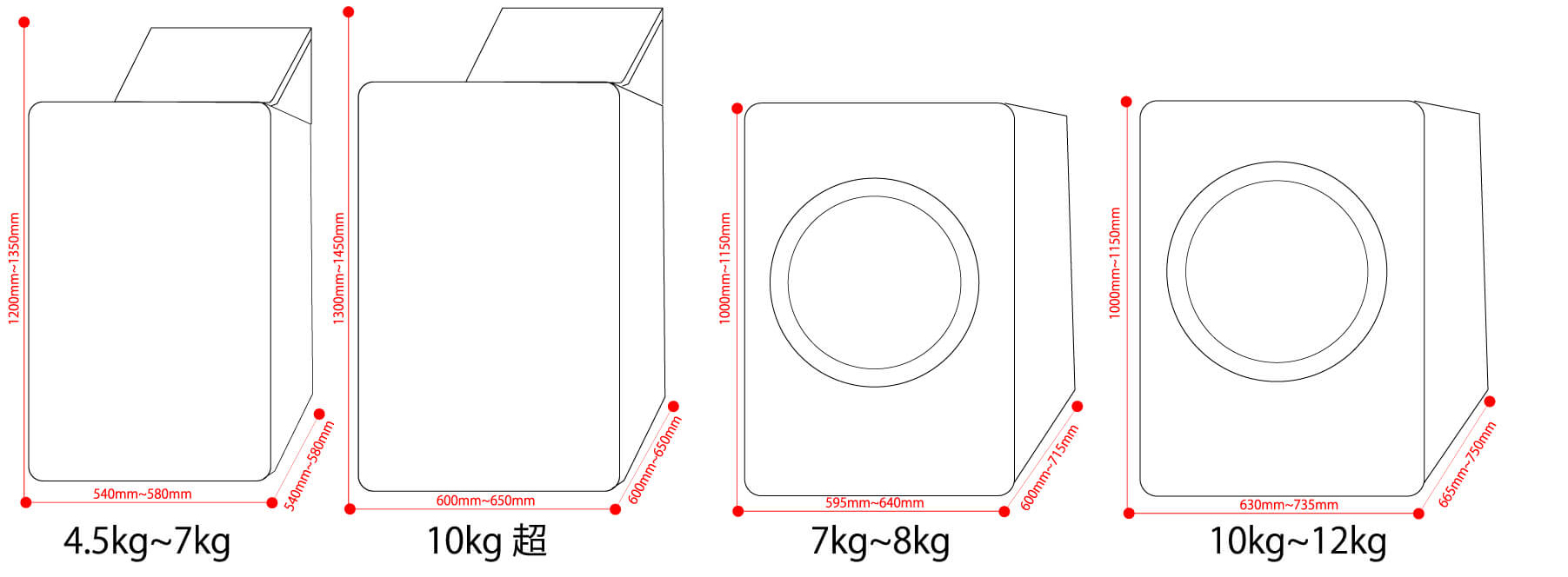
For those purchasing a new machine, understand the approximate dimensions based on the type of washing machine.

If the width of the washing machine space is shorter than 600mm, it may only accommodate vertical washing machines with a capacity of 5kg. For those requiring a drum-type washing machine, it's advisable to inform the real estate agent of this requirement before selecting a property.

Even slim drum-type washing machines have a minimum width of around 600mm. Since you'll want at least 50mm of space on each side to prevent a tight fit against the wall, a width of 700mm or more is preferable. Start by purchasing a slim drum machine to gauge the size and conduct meticulous measurements on-site.

(2) Pay attention to the height of the water supply inlet!

Even if the width and depth are adequate, the height to the water supply inlet may pose an issue. Especially with types featuring faucets, the length of the faucet can impact the installation. While the height of washing machines varies by manufacturer, ensure to measure it accurately. For vertical washing machines, consider the additional height when the lid is open. We've included a rough estimate of the height when the lid is open in the table above, so please refer to it.

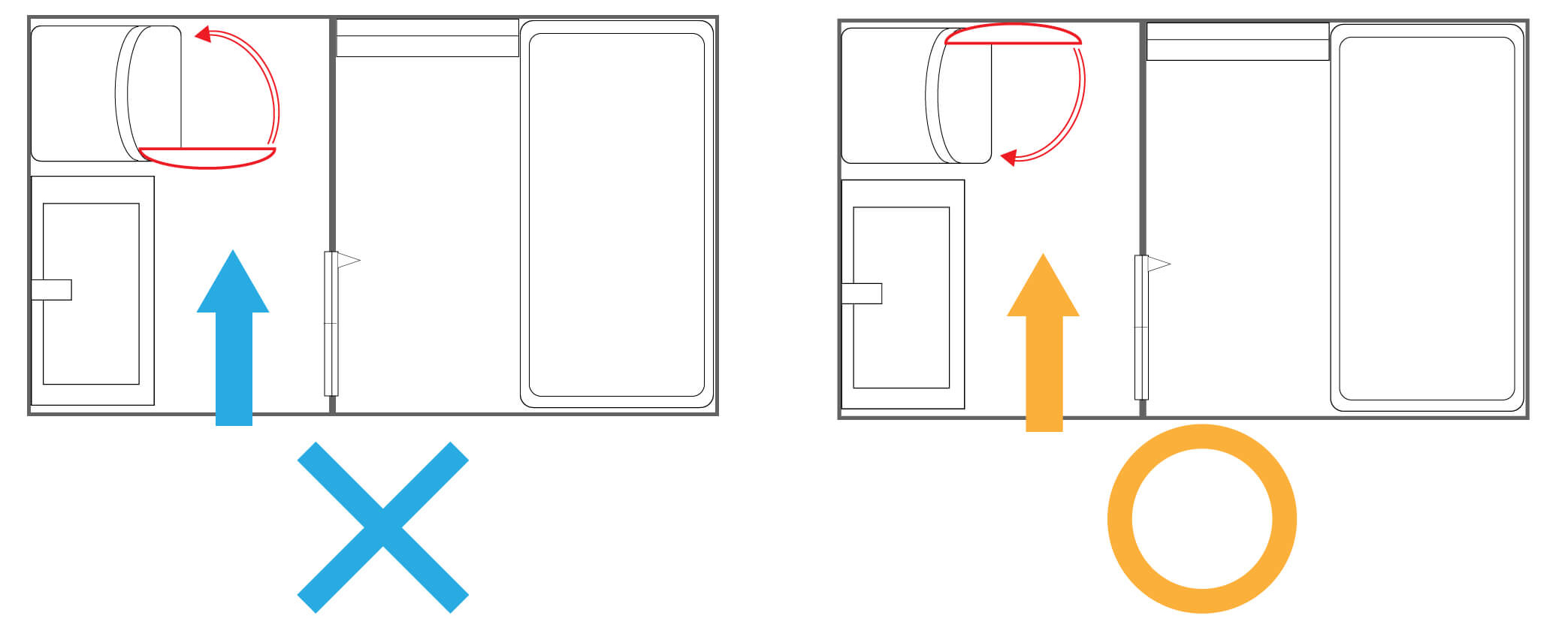
(3)Direction of opening the lid of a drum-type washing machine

This is often overlooked, but the direction in which the lid of a drum-type washing machine opens is crucial. While it's not an issue if the washing machine area can be placed frontally, if it's placed sideways, the direction of the lid's opening can significantly affect ease of access to load laundry.

This is a crucial but often overlooked aspect. When bringing an existing washing machine, be mindful of the layout selection, and when purchasing a new one, ensure to check thoroughly before buying.

4.Other Points to Note in Washing Machine Space in Rental Properties

Finally, let's explain other things to be careful about in the laundry machine space of rental properties.


(1) There is NO Elbow for Drainage

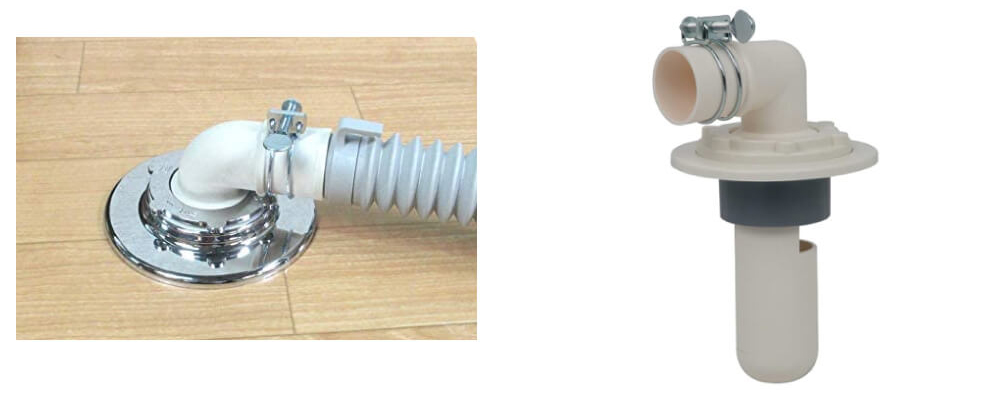
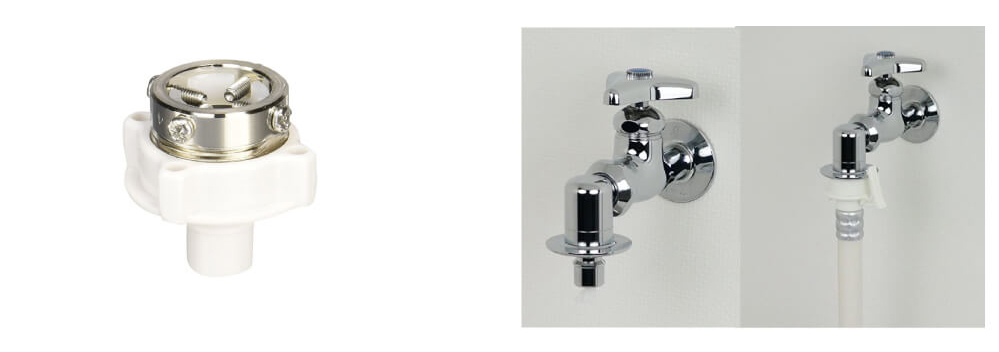
Actually, a quite common issue is the absence of an "elbow". You might not be familiar with the term "elbow", but it refers to the "L-shaped" pipe attached to the waterproof pan or drainage outlet in the laundry machine area.

An elbow is essential where there's a drainage trap. It's attached to the laundry machine's drainage hose, connecting to the drainage gutter to prevent water leakage and ensure the proper operation of the drainage trap. A drainage trap utilizes the structure of the drainage outlet to prevent odors and foreign objects from rising up the pipes.

Since it's something attached to the laundry machine's drainage hose, the previous tenant might have taken it when moving out. As the elbow is part of the equipment, contact the real estate agent or landlord to have them provide one.

However, in older properties, especially those with many years since construction, there might be no drainage trap, and the water might directly flow into the drainage outlet. In such cases, where there's no drainage trap, there's a higher risk of odor issues emanating from the drainage outlet. If there's no elbow, also check if there's a drainage trap. If there isn't, you can improve the situation by purchasing and installing an elbow with a drainage trap.

Elbows can be purchased at home depot or online.

Image reference: AMAZON Washing Machine Elbow


(2) There is NO Laundry Machine Waterproof Pan

In the explanation, there were photos of properties without a waterproof pan. In rental property laundry areas, it's common to find no waterproof pan. This serves three purposes: (1) preventing water leakage and condensation, (2) reducing vibrations and noise, and (3) making cleaning and maintenance easier.

Regarding (1), since the waterproof pan prevents water leakage within itself, it's not a significant issue. However, for (2) and (3), it's better to be prepared.

An effective item for both reducing vibrations and facilitating cleaning and maintenance is a stand for raising height (Washer Riser Platform) pan. If you have the budget, purchasing one with casters will greatly assist during cleaning. They can be purchased for around 3,000 yen. There are also it without casters made of vibration-absorbing rubber. They are recommended not only for properties without it but also for properties with flat-type waterproof pans, as they help reduce vibration and make cleaning easier.

Image reference: AMAZON a stand for raising height (Washer Riser Platform) pan


(3) Not Understand How Water Supply Works

There is a pattern of points to note when storing washing machines, such as not knowing the water supply mechanism. In many rental properties, there's either a nipple for water leakage prevention or an adapter for the faucet. However, these might have been taken by the previous tenant when moving out. In such cases, ask the real estate agent to have the landlord install a water supply adapter for laundry machines. Sometimes, you might be asked to cover the cost of installation. If that's the case, for new purchases, request installation upon delivery, and for previously owned ones, ask the moving company to handle it.

Image reference: AMAZON Washing Machine Faucet Adapter


(4) Adequate Space but Unable to Bring in

Finally, those considering installing a drum-type washing machine need to be especially cautious. Although there's sufficient space in the laundry machine area, problems might arise when trying to move it in. Issues such as properties without elevators, stairs that can't accommodate large appliances, or doorways that are too narrow are quite common.

When making a new purchase, some home appliance stores offer services to check if delivery is possible. Drum-type washing machines are expensive products. Always make sure to have them checked in advance.

External link: Yodobashi Camera: About requesting installation estimates

5.At the end...

That was the article about how much space is needed in rental property laundry machine areas and what to watch out for viewing.

The laundry machine area in rental properties is surprisingly prone to mistakes for size. The most important thing is to carefully check the size by referring to the manual if you're bringing your own washing machine. If you're purchasing a new one, first decide whether it's a drum-type or vertical-type machine, then pick the desired product and note down the size.

When you've narrowed down your property selection, always make precise measurements to ensure installation is possible. For drum-type washing machines, some home appliance stores offer services to check if installation is possible. Since these machines often cost over 200,000 yen, be sure to have them checked beforehand.

If you're looking for rental properties along the Tokyu Line, don't hesitate to contact BALLEGGS. Experienced staff will provide thorough support for your laundry machine area needs, including measurements!

Thank you for reading until the end.

What do “PS,” “MB,” “AC,” and “R” mean when they’re written on floor plans? Let me explain the abbreviations and symbols.

What do "PS," "MB," "AC," and "R" mean when they're written on floor plans? Let me explain the abbreviations and symbols.

Floor plans play an important role when renting a room.
Just looking at them can spark excitement as you imagine furniture arrangements and your new life.
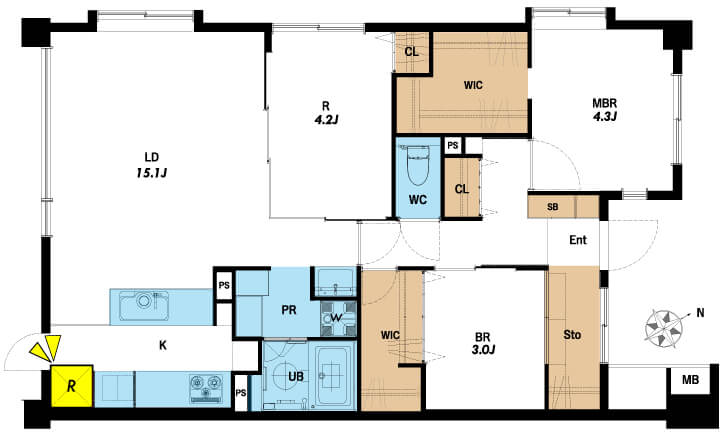
Floor plans often include various abbreviations and symbols like "PS," "MB," "AC," and "R." Do you know what they mean?
Some may be familiar while others might not make much sense. In this article, we'll thoroughly explain the various abbreviations and symbols found on floor plans.
Be sure to make use of this information when inquiring about properties or choosing ones to view!

1.What does "PS" mean on a floor plan?

PS
What does "PS" mean when it's written on a floor plan? It might be one of the most mysterious abbreviations on the drawings. Let me explain what “PS” means!


(1) What is "PS"...

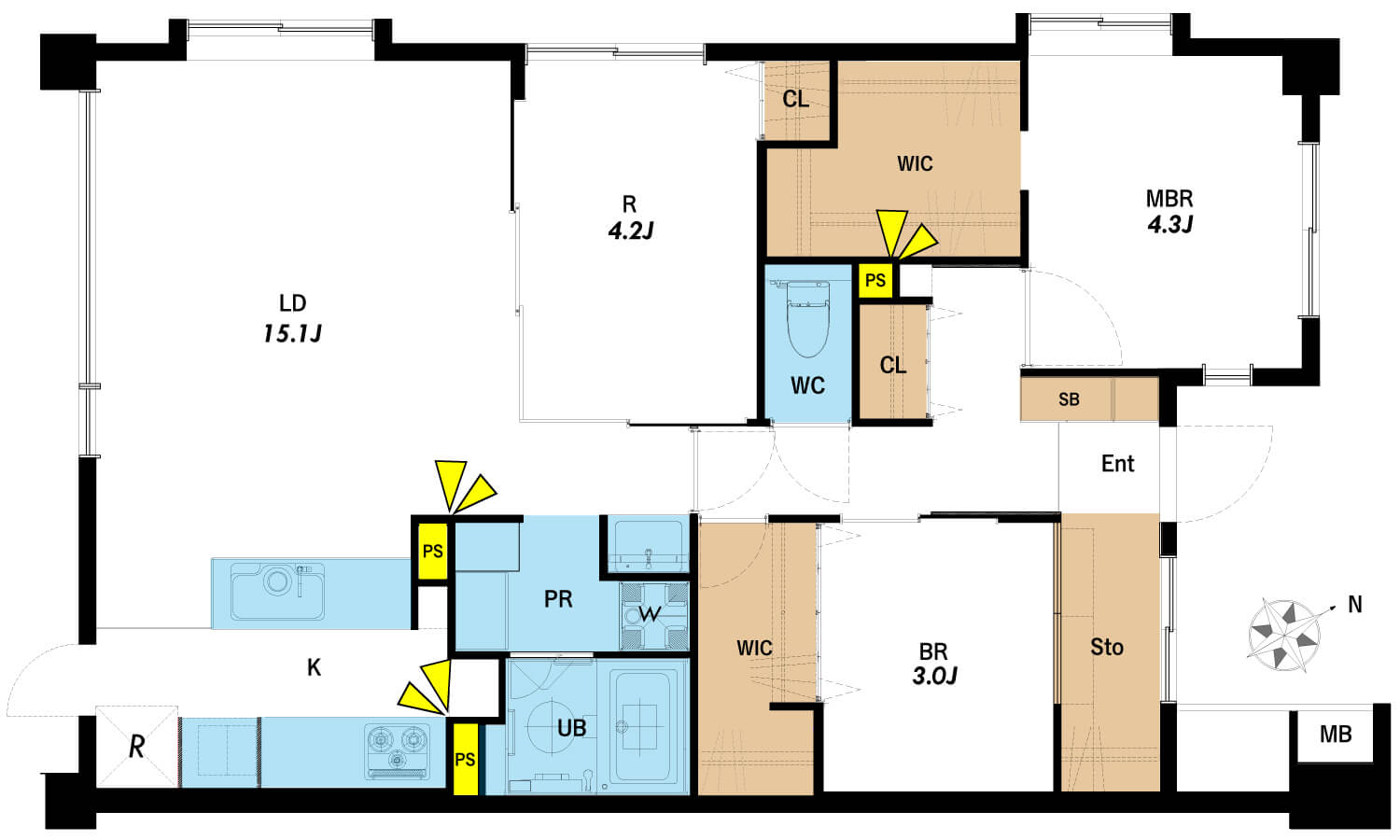
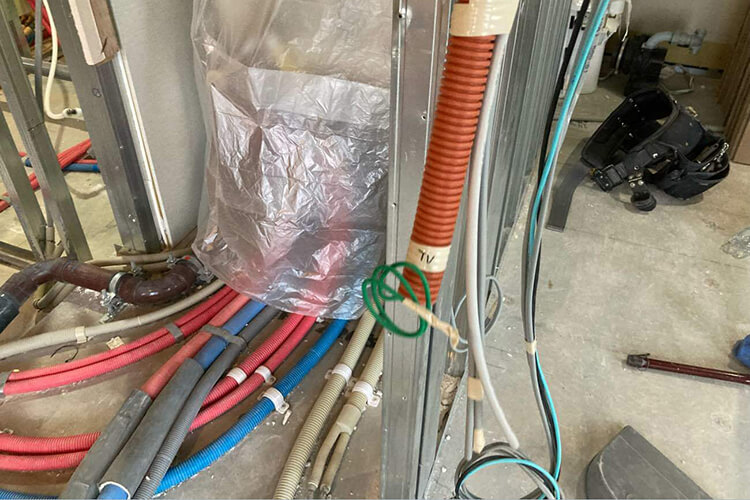
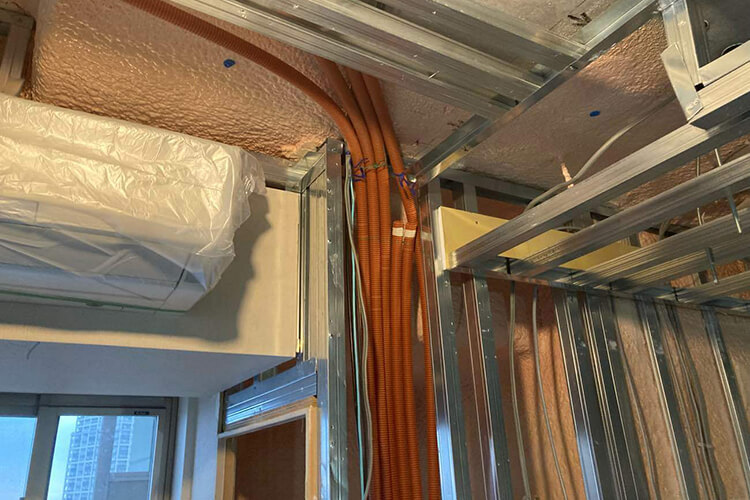
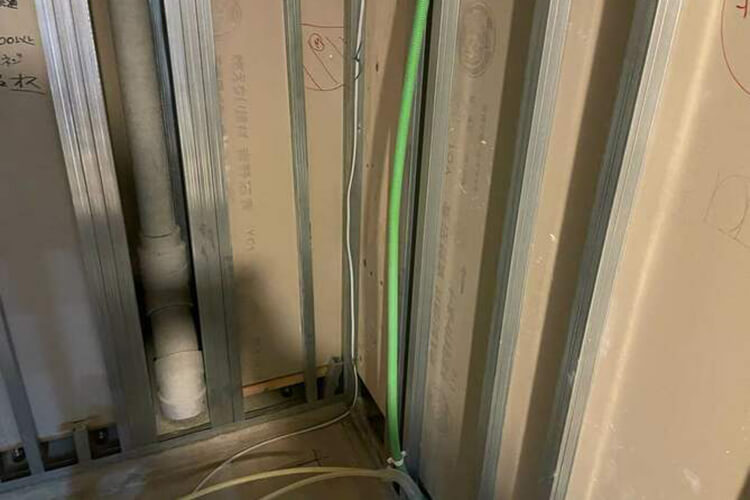
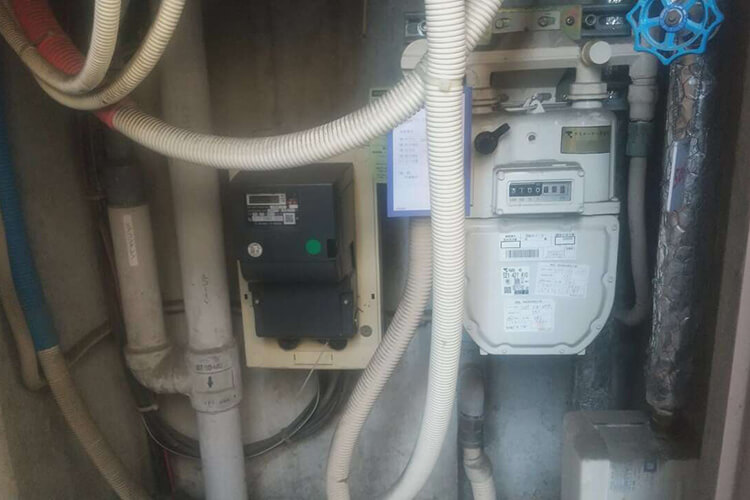
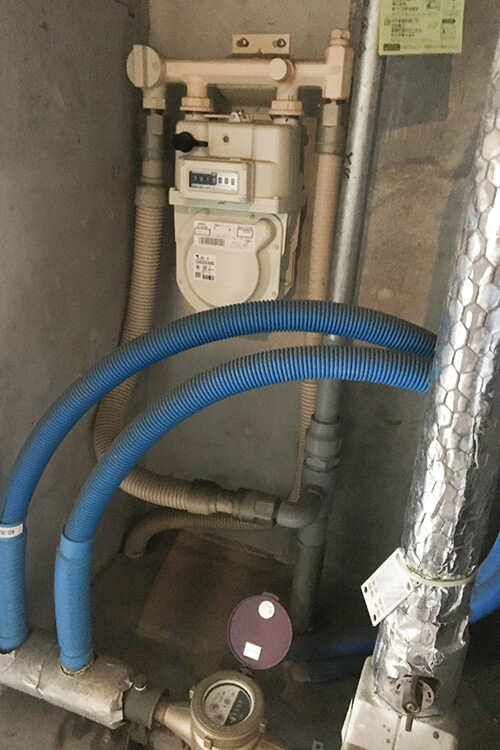
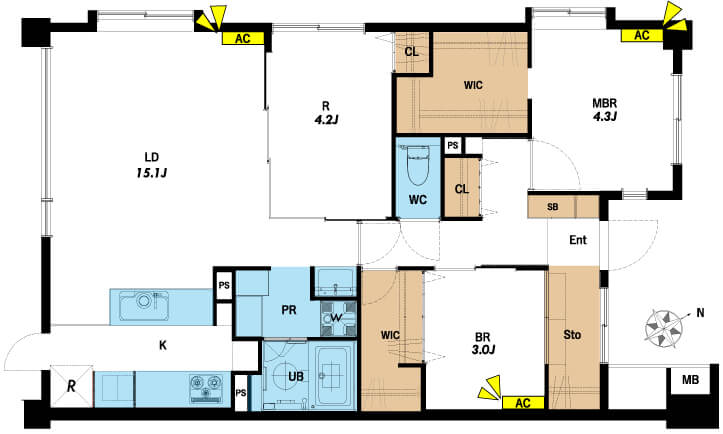
"PS" stands for "Pipe Space." Looking at the floor plan, you'll see PS (Pipe Space) next to the kitchen, bathroom, dressing room, and toilet on a floor plan. PS (Pipe Space) is located in the same place on each floor, connecting the building vertically. If it is exposed, it can be noisy and prone to damage. That's why it's enclosed in PS (Pipe Space).


(2) Photo of the inside of PS

2.What does "MB" mean on a floor plan?


What does "MB" mean when it's written on a floor plan, often found next to the entrance? Let me explain what “MB” means!


(1) What is "MB"...

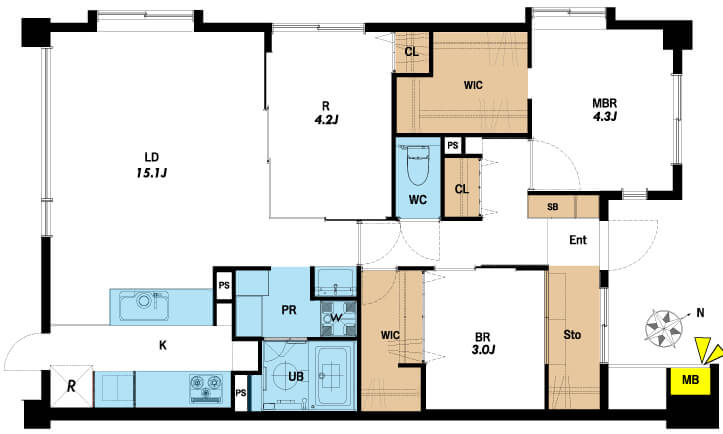
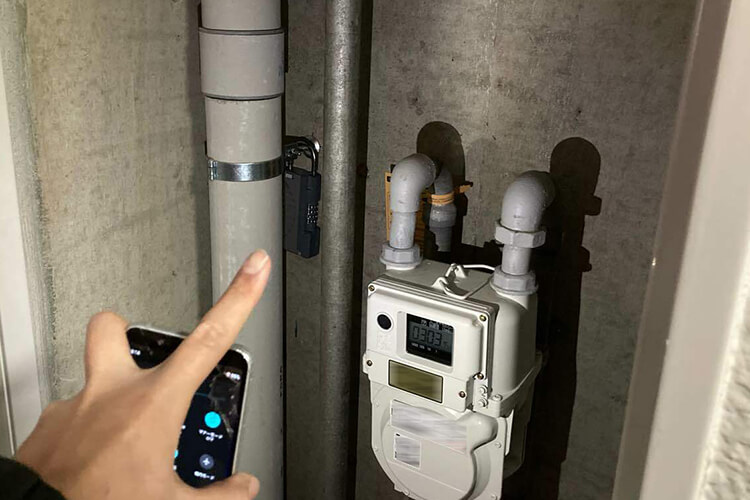
"MB" stands for "Meter Box." Looking at the floor plan, you'll see MB (Meter Box) outside living spaces, often next to the entrance on a floor plan. MB (Meter Box) is placed there to make it easier for external personnel, such as gas or electric companies’ staff to read meters.


(2) Photo of the inside of MB

3.What does "AC" mean on a floor plan?


What does "AC" mean when it's written on a floor plan? Since it's particularly important for rentals, Let me explain what “AC” means!


(1) What is "AC"...

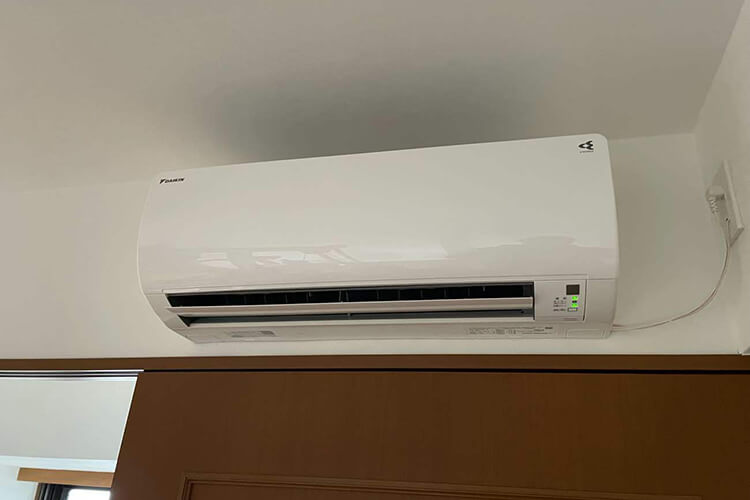
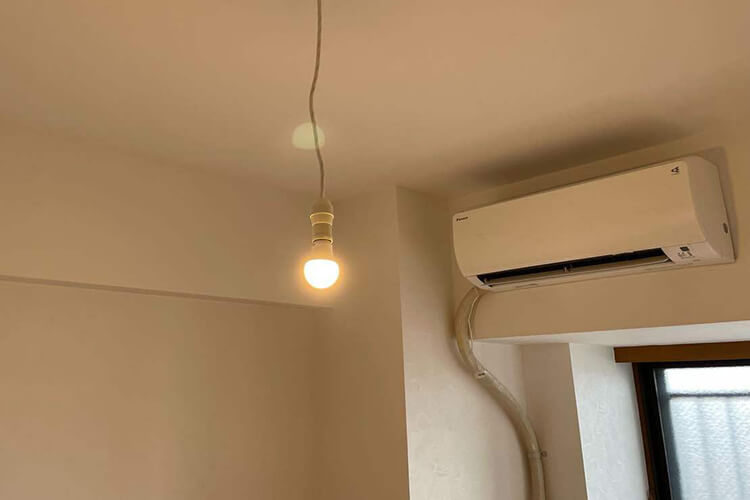
"AC" stands for "Air Conditioner." While it may not be listed on floor plans for 1K-type properties, it's essential for 1LDK, 2DK, and 2LDK types. In rental properties, air conditioning may either be installed as a facility or left behind by the previous tenant. In the case of the latter, since the landlord has no obligation to repair it, you'll need to fix it yourself if it breaks. Additionally, some properties may not allow for outdoor unit installation, meaning there might be no air conditioning or the ability to install it yourself, so be cautious. Outdoor units are typically installed on balconies or in corridors next to entrances.


(2) Photo of AC

4.What does "R" mean on a floor plan?


What does "R" mean when it's written on a floor plan? Since it's mostly indicated in the kitchen, you might have an idea, but Let me explain what “R” means!


(1) What is "R"...

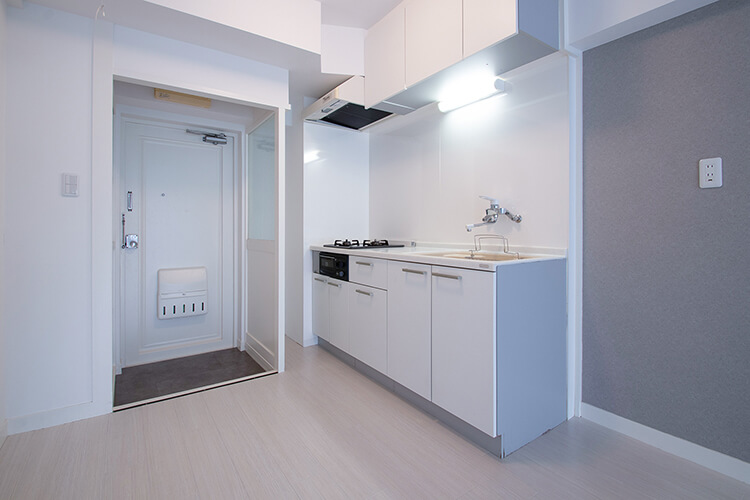
"R" stands for "Refrigerator," indicating the refrigerator space. In some cases, you might see a square with a cross inside instead of "R." This means that the refrigerator is not provided as a facility, so be careful not to misunderstand. In floor plans for rental units like 1R or 1K, if there's no mention of "R" (refrigerator space), you may need to place the refrigerator inside the living space, which can reduce the actual space that you can use in the room because you have to place a fridge, so be cautious. If there's no mention, check during a viewing if there are outlets at the top of the walls.


(2) Photo of "R" (refrigerator space)

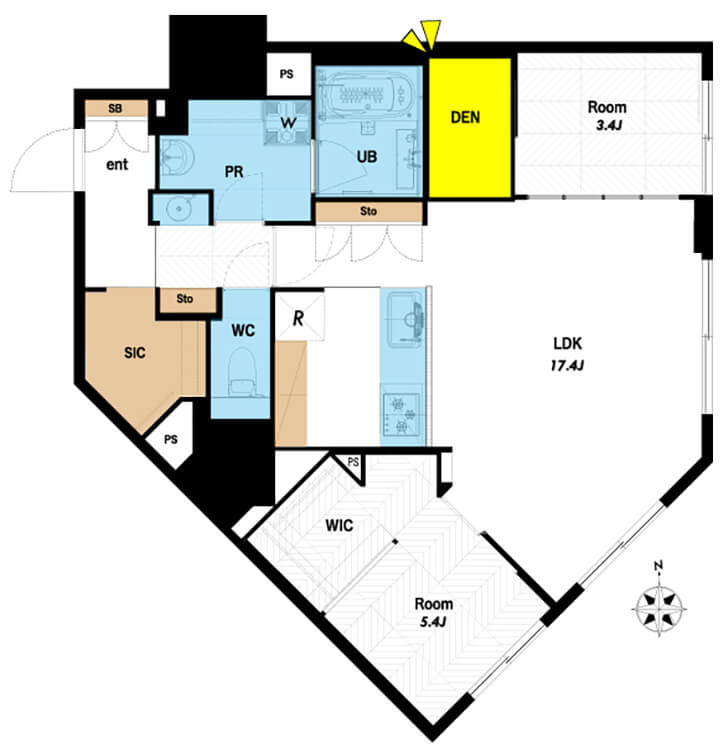
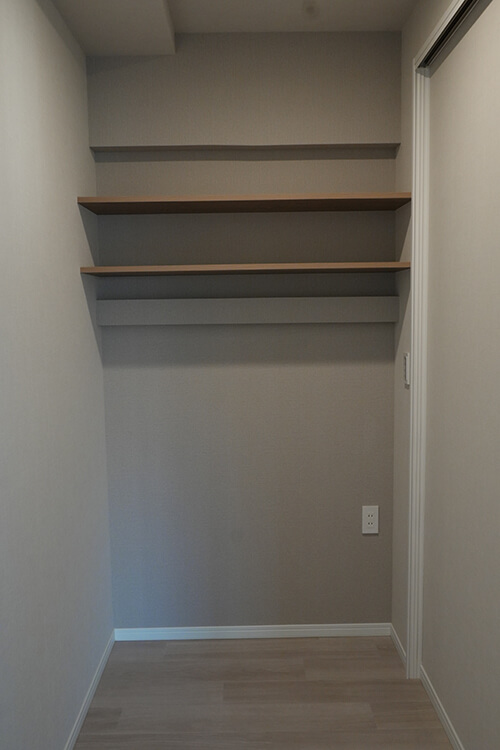
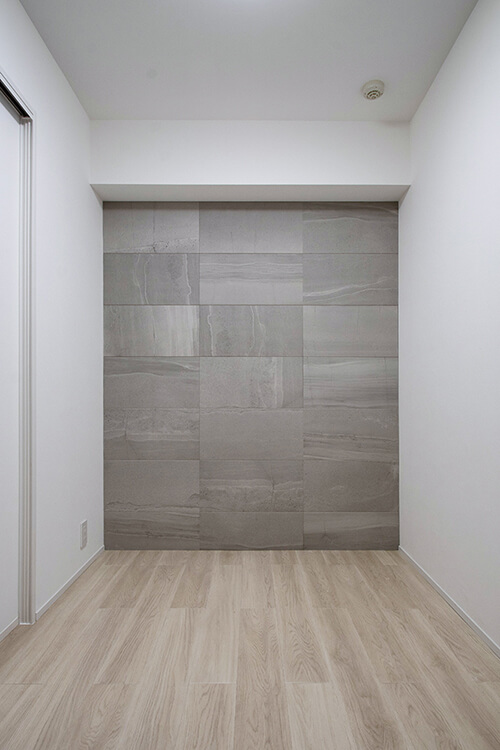
5.What does "DEN" mean on a floor plan?


What does "DEN" mean when it's written on a floor plan? You might not come across it often, but it can sometimes be found beside living rooms or near entrances. Let me explain what “DEN” means!


(1) What is "DEN"...

"DEN" is pronounced as "den." Surprisingly, it's not an abbreviation but the English word meaning "nest, hideaway, or sanctuary." DEN signifies a versatile space that can be used as a study or hobby room, sometimes also referred to as "nando" in Japanese. It doesn't meet the requirements for a room specified by building standards, so it can't be labeled as such. "S" (service room) is quite similar, but service rooms are primarily used as storage spaces.


(2) Photo of "DEN"

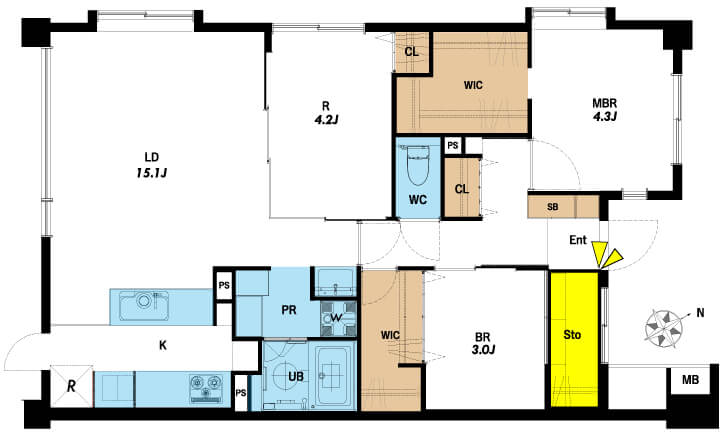
6.What does "Sto" mean on a floor plan?


What does "Sto" mean when it's written on a floor plan? You might occasionally encounter it in condominiums or detached houses. Let me explain what “STO” means!


(1) What is "Sto"...

It's an abbreviation of "storage," indicating storage, warehouse, or closet space. Similar to DEN, it doesn't meet the requirements for a room specified by building standards, so it can't be labeled as such. "S" (service room) is quite similar, but service rooms are primarily used as storage spaces.


(2) Photo of "Sto"

7.Summary of Abbreviations and Symbols on Floor Plans

Summary of Abbreviations on Floor Plans

Abbreviation Meaning Japanese Term Explanation
PS Pipe Space パイプスペース Space where water supply and drainage pipes pass through
MB Meter box メーターボックス Space where electrical, gas, and water meters are stored
AC Air Conditioner エアコン Location for installing air conditioner
R Refrigerator 冷蔵庫置場 Space for refrigerator; sometimes indicated by a square with a cross without "R"
DEN Den 書斎・納戸 Multipurpose space used as a study or storage; read as "den"
Sto Storage ストレージ Storage space, different from a closet as it can be walked into
S Service room サービスルーム Storage space, different from a closet as it can be walked into
W Washing machine 洗濯機置場 Space for washing machine; sometimes indicated only by a square
SB Shoes Box シューズボックス Shoe storage space; shoe closet
UB Unit Bus ユニットバス Bathroom and toilet combined; three-point unit if bath, toilet, and sink are in one room, or a unit bath with only a bathtub
SIC Shoes In Closet シューズインクローゼット Shoe storage space that can be walked into
WIC Walk-In Closet ウォークインクローゼット Storage space that can be walked into
CL Closet クローゼット Storage space
LDK Living Dining Kitchen リビングダイニングキッチン Living, dining, and kitchen space; for 1LDK, requires a room of 8 tatami mats or more, and for 2LDK, 10 tatami mats or more
DK Dining Kitchen ダイニングキッチン Dining space of 6 tatami mats or more
K Kitchen キッチン Independent kitchen space
BR Bed Room ベッドルーム Bedroom
MBR Main Bed Room メインベッドルーム Main bedroom
WC Water Closet トイレ Restroom; a remnant term from when powder rooms were referred to as such overseas
ent Entrance 玄関 Entrance; entrance hall
PH PentHouse ペントハウス A space or mechanical room installed on the rooftop or attic
RF Roof Floor ロフト A space on the mezzanine floor inside a Western-style room or attic


Lastly...

That concludes the explanation of abbreviations and symbols found on floor plans. The information provided on floor plans is crucial. I hope you can utilize this article in your property search and kickstart a better new life. We also publish property information on our website, so please search and view various floor plans. If you find a good property, please feel free to contact us at Balleggs.
Thank you for reading until the end.

Q&A

When is a good time to start looking for an apartment?
From application to move-in, it generally takes at least one week.
Considering the period from application to the move-in,could be up to 2 weeks to one month, it's advisable to start searching for a room one month in advance.
What criteria should I use in my search?
Initially, we will ask about your preferred area (school/Job district), layout, and budget.
As a general guideline, it's said that rent should be about one-third of your income (salary).
Are student visa holders permitted to rent property in Japan?
Students are also able to rent properties.
However, there are some conditions required for signing the contract under the student's name.
We can introduce properties that students also can rent, so please feel free to contact us.
What should I bring when I go to a real estate agency?
You don't need to bring anything in particular, Just in case please bring your residence card with you ! 🙂
Can I move into a vacant room immediately?
Application and tenant screening are required !
For new constructions, the move-in date is after the building is available(after finishing the repair and cleaning),and it's after the previous tenant has moved out.
However, this doesn't mean you can move in immediately.
First, you need to apply for the apartment, and then you must pass a "tenant screening" process, which is essentially a test for eligibility.
Only after passing this process can you proceed with the contract and move in.
Do I need to pay the money to apply?
Generally, no payment is needed at the time of application.
Payments are required after we get approved from the landlord and when we sign the contract.
What is the process from application to move-in?
The process is: Application → Screening → Payment of Contract Money and Submission of Required Documents→Contract Signing → Key Handover and Move-in.
What do I need at the time of the contract?
You'll need to bring a seal (hanko), a copy of the tenant's residence card, among other things.
Requirements may vary by property, so we will guide you before we sign the contract.
When will I receive the keys?
Generally, keys are handed over the day before the contract start date after 4pm.
How do I start using utilities like electricity, gas, and water?
You'll need to complete procedures to start each service.
Our staff will guide you through the process.
If I find noticeable damages (like on walls or floors) that weren't caused by me, what should I do?
To avoid being held responsible for damages you didn't cause, report them to your agent as soon as you notice them.
It's also a good idea to take photos of the damages.
What should I do if the facility troubles happen in my room?
Regarding the problems with air conditioning, lack of hot water, leaks, etc., you should contact the management company.
They will arrange for repairs, which will be covered by the landlord if there's no misuse on your part.

About Us

Balleggs is a real estate agency that supports clients from overseas considering rental, purchase, and investment in the Tokyo real estate market.
We have had the opportunity to serve clients from over 70 different countries since Balleggs was established in 1991.
Please feel free to contact us. We can assist you in person or online.

Our services

Our services

We believe that one of the reasons we have earned 5.0 google reviews with 200+ reviews is our ability to introduce the most suitable properties to all foreign clients, including students and working professionals from all available listings in the market.
Our goal is simply to find the ideal room for all of our clients.

Our global division team

Our global division team

All of our staff members are qualified real estate transaction specialists capable of communicating in English, Korean, and Chinese.
Please allow us to assist you in finding a rental property in Tokyo in your preferred language.

Based in the areas over 30 years

Based in the areas over 30 years

We have been specializing in rental properties in the southern part of Tokyo for nearly 35 years.
If you are looking for a rental property in Meguro Ward, Setagaya Ward, Shibuya Ward, Shinagawa Ward, Ota Ward, or Minato Ward, please feel free to contact us.
Let us be your help!

Staff

RYO

Ryo Sugisaki

【Where I have lived】Tokyo/Canada
【Qualification】Real Estate Transaction Specialist
【Available Languages】Japanese/English
【About me】I was born in Tokyo in the Sangenjaya neighborhood and grew up in Jiyugaoka. After graduating highschool , I moved to Canada and lived there for about 8 years. After becoming a permanent resident of Canada a couple years ago I moved back to Tokyo and have been working for Balleggs since.
【Message】I know how stressful searching for a new place in Japan can be, so my goal is to explain all the process in the language you are most comfortable with (Only English or Japanese though). I'm looking forward to helping you start your new life here in Tokyo!

PAKU

Shinshi Paku

【Where I have lived】China/South Korea/Indonesia/Japan
【Qualification】Real Estate Transaction Specialist
【Available Languages】Japanese/English/Chinese/Korean
【About me】I have been in Japan for around 11 years now.
When I first arrived, I couldn't speak any Japanese, and adapting to the new environment was incredibly challenging for me.
Especially how difficult it was to find my own room as a foreigner.
As I started to get used to life in Japan,
I noticed that many foreigners were struggling to find their own apartments, just like I did.
That made me realize that I wanted to assist all the people who need help finding apartments.
This is why I entered the real estate industry and began studying English.
【Message】Based on our extensive experience, we can help you all to find better places through a simple process!
I'm not just a realtor,I'm here to be your partner in starting a fantastic new chapter in life 🙂

Regarding our New year’s Holdays.

Thank you for your support as always.

Today, we want to inform you about our New Year’s holidays.

The office will be closed during the period below.
2023 Dec. 26th (TUE) to 2024 Jan 3th (WED)
We will resume working from 2023 Jan 4th.

Our reply will be from the 5th, but feel free to contact us via this website, or through our email!

Contact us >>

Email
global@balleggs.co.jp

Apologies for any inconvenience it may cause,
thank you very much for your cooperation!

Best wishes for the holidays and the New Year 2024!

Summer OBON holidays

Hello!

Thank you very much for all your help and support as always.

Today, I want to inform you about our Summer -OBON- holidays.

The line 03-5720-8316 will be closed
from August 12th to August 16th,
due to the Summer holidays in Japan: OBON.
The line will be open again from August 17th 10:00AM.

Our reply will be from the 18th, but feel free to contact us via this website, or through our email!

Contact us
https://rent-apartment.tokyo/contact_normal

Email
global@balleggs.co.jp

Apologies for any inconvenience it may cause.

Hope you all have a great summer!

Thank you.

BALLEGGS​

【Golden week closure】

Hello!

Thank you very much for all your help and support as always.
Due to the Golden Week holidays in Japan, our office will be closed on the following days:

May 2 (Tue)
May 3 (Wed)
May 4 (Thu)

We will resume business as usual from May 5th,Friday 10:00.
We are sorry for the inconvenience this may cause you,
thank you very much for your understanding and cooperation.

Thank you.

BALLEGGS

Regarding our New year’s Holdays.

Thank you for your support as always.

Today, we want to inform you about our New Year’s holidays.

The office will be closed during the period below.
2022 Dec. 27th (TUE) to 2023 Jan 4th (WED)
We will resume working from 2023 Jan 5th.

Our reply will be from the 5th, but feel free to contact us via this website, or through our email!

Contact us
https://rent-apartment.tokyo/contact_normal

Email
global@balleggs.co.jp

Apologies for any inconvenience it may cause,
thank you very much for your cooperation!

Best wishes for the holidays and the New Year 2023!

Summer OBON holidays

Hello!

Thank you very much for all your help and support as always.

Today, I want to inform you about our Summer -OBON- holidays.

The line 03-6388-6889 will be closed
from August 13th to August 17th,
due to the Summer holidays in Japan: OBON.
The line will be open again from August 18th 13:00PM.

Our reply will be from the 18th, but feel free to contact us via this website, or through our email!

Contact us
https://rent-apartment.tokyo/contact_normal

Email
global@balleggs.co.jp

Apologies for any inconvenience it may cause.

Hope you all have a great summer!

Thank you.

BALLEGGS​

What do you need to prepare for your new life in Tokyo/ Japan?

Already 2 months have passed since April.
April- new semester starts in this season in Japan.
To make a smooth start for your new life in the new place,
check out our article here what you need to know and prepare for your new life in the new place!

What do you need to prepare for your new life?

Living on our own is totally different from living with your family.
What do you need to prepare?

There are two types.
1- What you need to prepare beforehand.
Bedding
Desk
Kitchen stuffs
Fridge
Microwave
Washing machine
Curtains
Dishes
Trash can
Vacuum cleaner
Utility set-ups

2-What you might need to prepare if there was no installation in the new apartment.
Gas stove at the kitchen
Light
Aircons
*It is better to ask the landlord/ maintenance company what is in there/ what is not. The installation differs depending on the apartments!

Also…
What it is better to have
As being in a nice and fresh look, it is better to have the items as below!
Clothes Iron
Mirror
Internet access

What you might not to prepare
Some of the items might be not that necessary for your daily life!
Look at your list… do you really need ‘that’ ?
Clock
Sofa
Chairs
Toaster oven
TV
Kettle

Some of us use your alarm with your mobile phone, not the clock.
Some of us use our tablet for viewing videos/ having information from- not TV.
There are microwaves which has an equipment of Toaster oven.
…Thinking a little more about the list, you might be able to see what you really need, what you don’t.

What you need to prepare before/right after your moving-in
*Small items
-Toilet rolls
-Tissues
-Light bulbs
-Laundry detergent
-Hangers
-Dishwashing soap
-Soap


How much will the monthly living expenses be?
Due to the 2016 data from Statistics Bureau / Ministry of Internal Affairs and Communications Japan (*For citizens under 35 years old)

The average monthly living expense in Japan is said to be about 2,400JPY~8,000JPY.

What will be the main cost?
The expenses of consumables such as toilet paper, tissues, tooth brush, soap etc. was a
1,100JPY〜1,600JPY.
Other expenses will be items such as cosmetics. This part differs depending on how your personal preference will be.


Let’s start making the plan,
good luck on your new life!

【Golden week closure】

Hello!
Thank you very much for all your help and support as always.

Due to the Golden Week holidays in Japan, our office will be closed on the following days:
 May 3 (Tue)
 May 4 (Wed)
 May 5 (Thu)

We will resume business as usual from May 6th,Friday 13:00.

We are sorry for the inconvenience this may cause you,
thank you very much for your understanding and cooperation.

Thank you.
BALLEGGS

Thanks

Thank you for your inquiry.

I will contact you after confirming the contents.
Please wait for a while.

※Depending on the content of your inquiry, it may take several days to reply or we may not be able to answer.
We apologize for the inconvenience, but please be forewarned.

Regarding our New year’s Holdays.

Thank you for your support as always.


Today, we want to inform you about our New Year’s holidays.


The office will be closed during the period below.
2021 Dec. 28th (TUE) to 2022 Jan 5th (WED)
We will resume working from 2022 Jan 6th.


Apologies for any inconvenience it may cause,
thank you very much for your cooperation!


Best wishes for the holidays and the New Year 2022!

loveliest real estate agency you can find in Tokyo

I would like to first and foremost thank Ayui-san and Manami-san for having searched through so many apartments and finding me a lovely apartment around Suginami – something incredibly hard to find inasmuch as I am a student and foreigner on top with a certain budget. I can’t recommend them enough and must say that they are by far the most professional and loveliest real estate agency you can find in Tokyo – as a foreigner and national alike. Thank you very much!