
• お電話のお問い合わせ
  • How Much Space Do You Need for a Washing Machine in a Japanese Rental? What to Check During Viewings
    blog articles
    2026/11/26

    #

    How Much Space Do You Need for a Washing Machine in a Japanese Rental? What to Check During Viewings

    Figuring out the laundry setup in a Japanese rental apartment can feel surprisingly tricky—especially if you are moving from abroad. With drum-type washer-dryers becoming increasingly popular, checking the washing machine space (sentakuki okiba) is one of the most important steps in apartment hunting.


    Here is a practical guide to washing machine space types, drain pans (bousui-pan), measuring tips, and common pitfalls to watch out for during viewings in Japan.


    Table of Contents


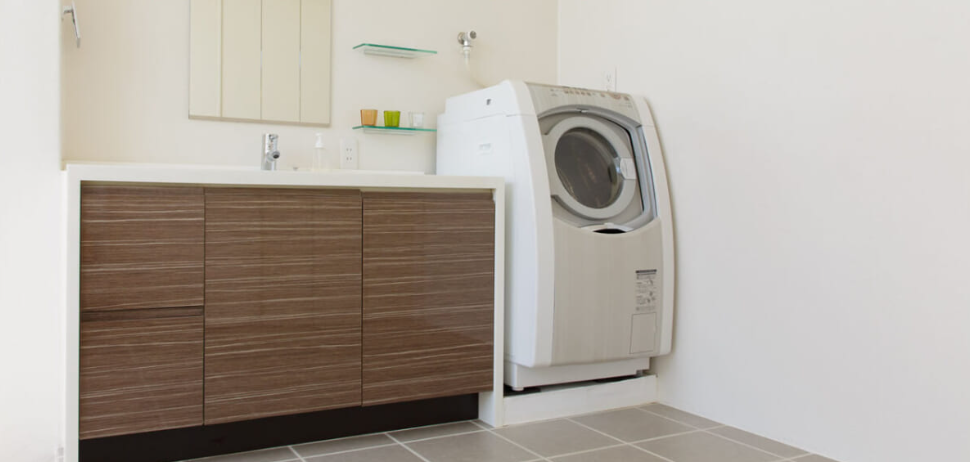
    Depending on the layout, you may either have plenty of room or need to measure very carefully.

    (1)Enclosed on Both Sides (Next to the Kitchen)


    賃貸の洗濯機置き場:左右が囲まれているタイプ(キッチン横)の写真と図面です。

    Common in studio (1R) and 1K apartments without a separate laundry/dressing room. Width is often tight, and the water supply valve (kyuusui-kou) is frequently placed right above the machine, limiting vertical clearance. Many use a 640mm × 640mm drain pan (inner dimensions around 586mm × 586mm), which often makes fitting a drum-type washer difficult.


    (2)Enclosed on Both Sides (Next to the Bathroom Vanity)
     

    この画像は賃貸の洗濯機置き場:左右が囲まれているタイプ(洗面台横)の写真と図面です。

    Common in apartments with a separate washroom/dressing area (datsujo-jo), positioned between the sink vanity and a wall. Width is often around 600mm, which may rule out drum washers. Because the water inlet is often recessed into the wall, height is less restrictive—though you may not have a drain pan and might need a riser stand (kasa-age-dai) depending on the model and drainage setup.


    (3)Built-In Cabinet / Closet Type:

    この画像は賃貸の洗濯機置き場:収納タイプの写真と図面です


    Located inside a recessed cabinet or closet. You must check the interior width and depth alongside the drain pan dimensions. Because cabinet doors swing or fold open, excess depth can prevent the doors from closing, and partial door openings can complicate installation. In some layouts, a 640mm × 640mm outer pan sits flush against a wall on one side, restricting side clearance even if the overall closet looks wide.


    (4)Wide / Open-Width Layout

    この画像は賃貸の洗濯機置き場:横幅に余裕があるタイプの写真と図面です

    When there is generous horizontal space, installation is usually straightforward. Measure the inner clearance carefully, check the height of the water supply connection, and use a riser stand if extra height is needed to connect the drain hose to the L-shaped drain connector (elbow).
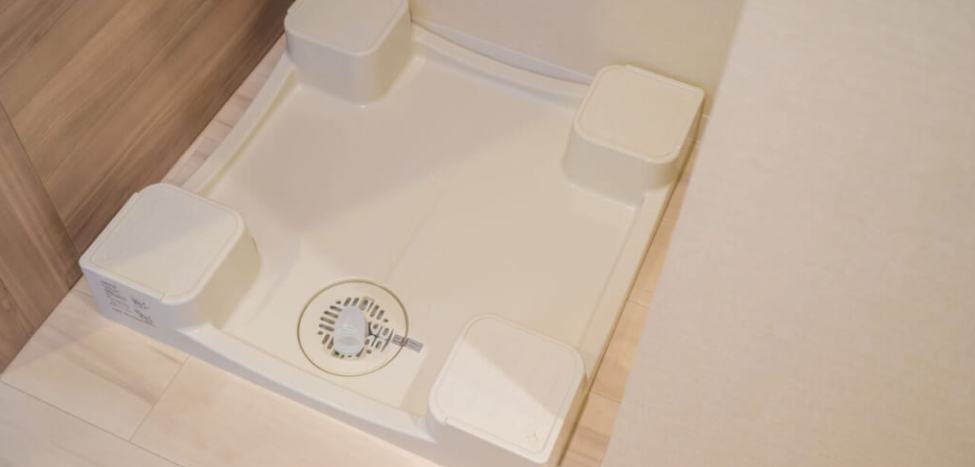


    Some Japanese rentals have a plastic or metal tray under the washer called a bousui-pan (waterproof/drain pan), while others do not.
     

    (1)Three Main Roles of a Drain Pan

      1. Preventing minor leaks and condensation damage: Catches small leaks or condensation drips to help protect the floor from moisture and rot (though it cannot stop a major overflow).

    1.  

      Reducing vibration and noise: Helps absorb spin-cycle vibrations so they do not transfer directly to the unit below—especially helpful in wood-frame or multi-story apartments.

    2.  

      Easier cleaning and maintenance: Depending on the design, it makes cleaning around the base and accessing the drain connection easier.

    Standard Outer Dimensions & Types

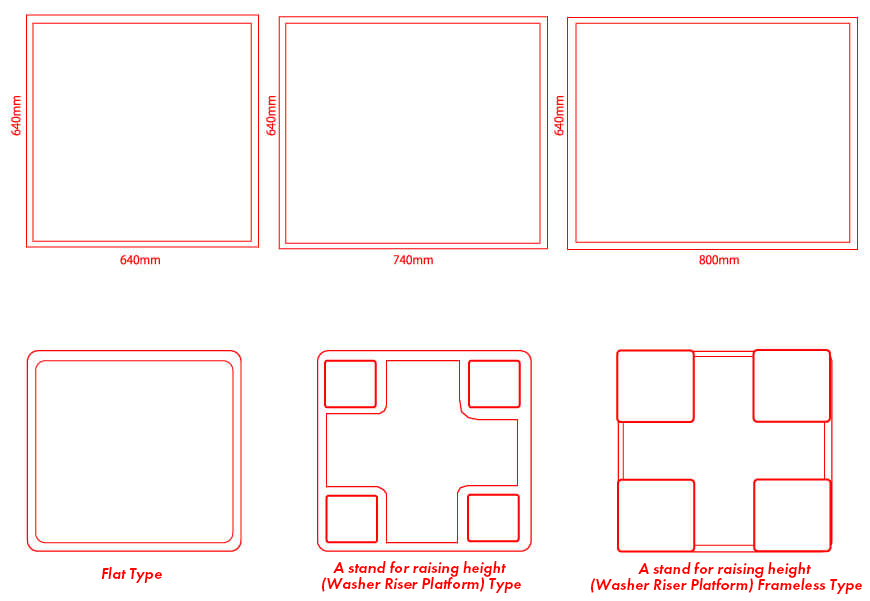
    • Standard outer sizes: 640mm × 640mm, 740mm × 640mm, or 800mm × 640mm.

    •  

      ・Flat type: Basic pan focused on catching leaks; compatible with most washer styles, though tight clearance under the machine can make cleaning harder.

    •  

      ・Raised / Riser type (kasa-age): Higher corners and a recessed center for easier cleaning and hose connection, though the raised height affects clearance up to the water inlet.

    •  

      ・Riser without high side rim (kasa-age waku-nashi): Raised corners with minimal/no side frame, making cleaning and fitting drum washers easier while minimizing frame interference.


    (1)Check exact washer dimensions first

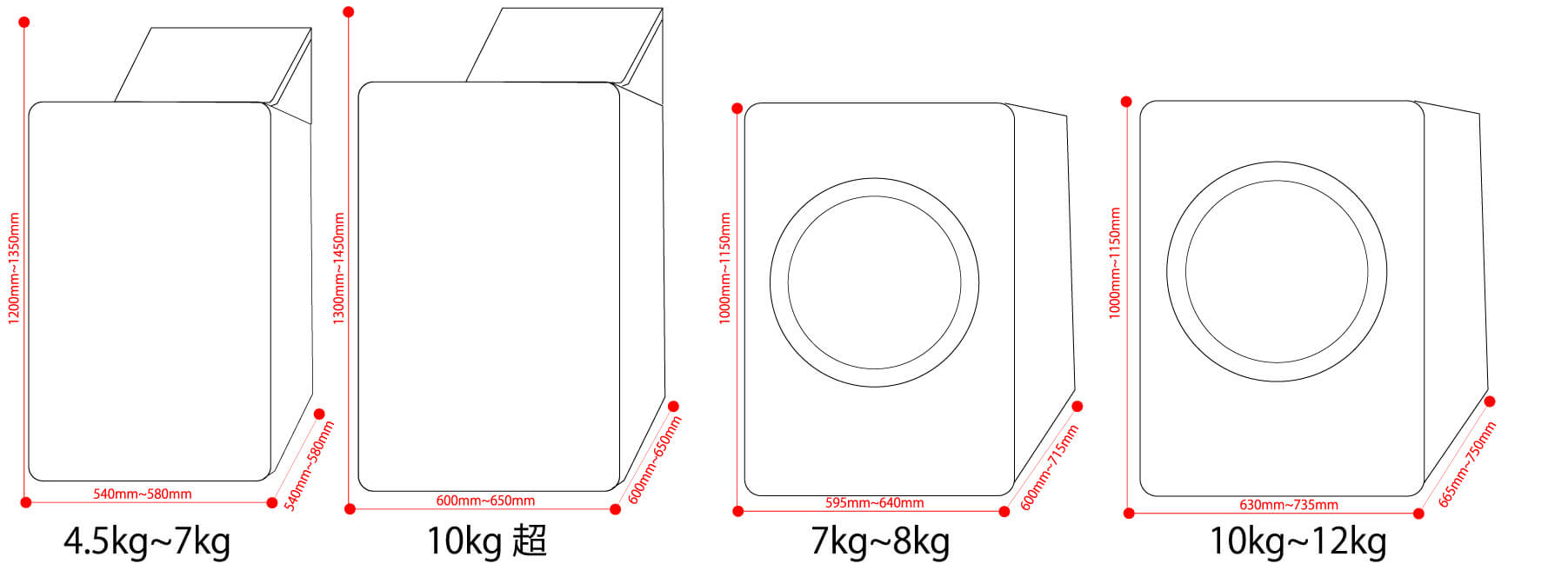
    bringing an existing machine, check the manual or look up the model number on the manufacturer's website. If buying new, narrow down whether you want a top-loader (tate-gata) or drum washer (doramu-shiki) and note exact dimensions.

    Keep in mind that even slim drum washers generally start around 600mm wide, and machines need clearance around them (typically around 10mm per side, or 100mm+ on a side where a hose passes—roughly 620mm+ total width for bottom-draining setups and 710mm+ when routing a hose along the side).

    (2)Watch the height to the water supply (kyuusui-kou)

    Even if width and depth fit, the water valve or faucet protrusion can block installation. For top-loading washers, also measure height with the lid fully open.

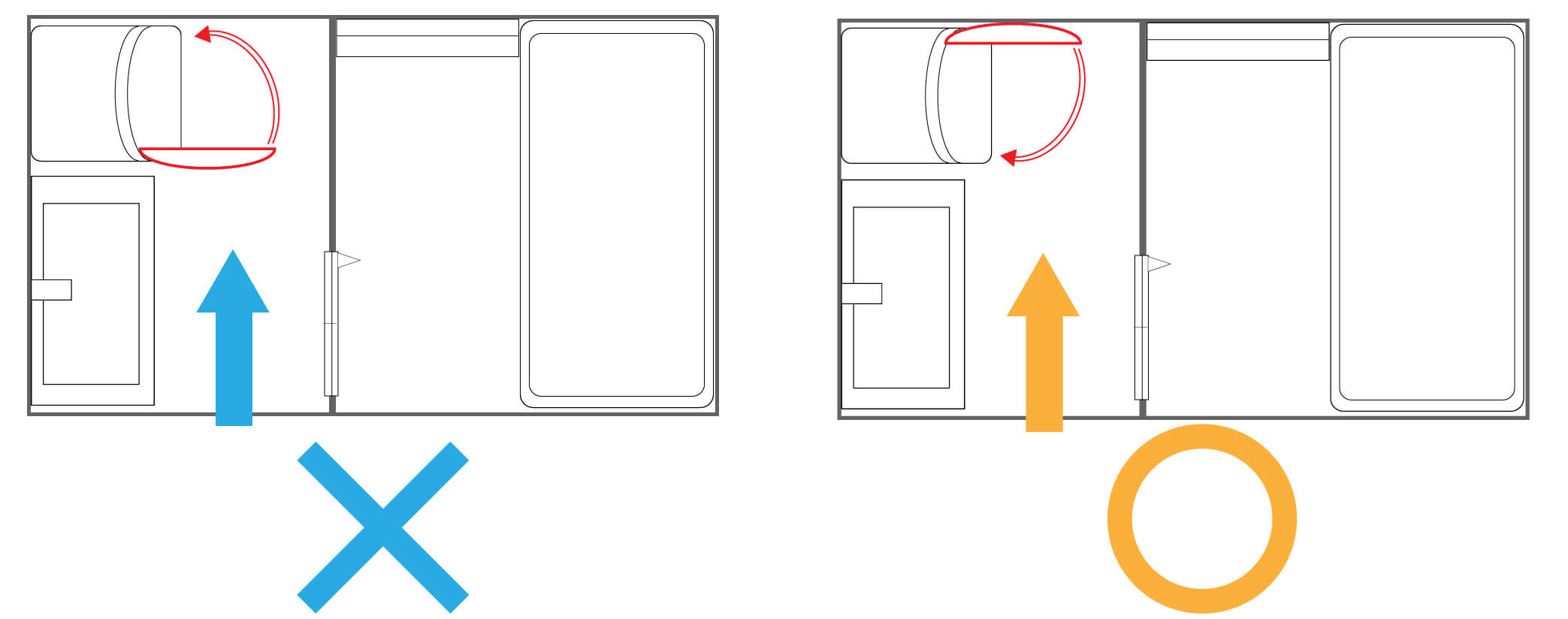
    (3)Check drum door swing direction

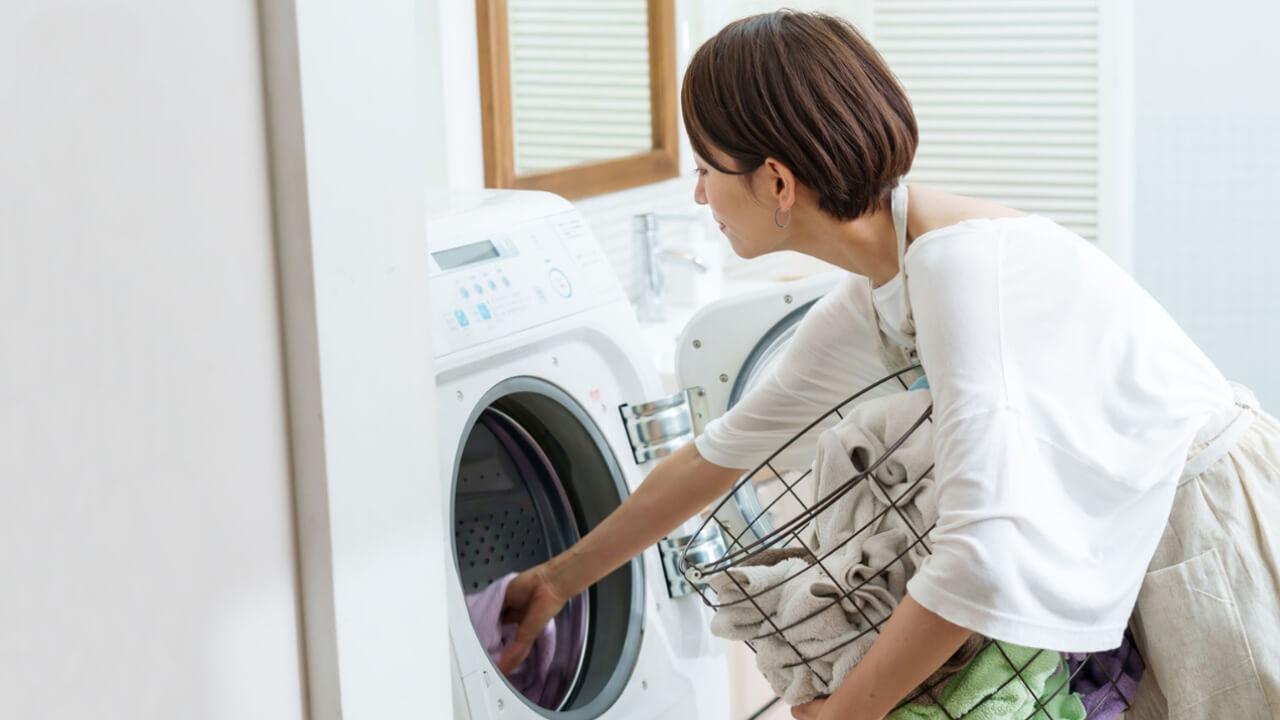
    washing machine is installed sideways (yoko-muki) rather than facing straight out, a door that opens the wrong way can make loading and unloading laundry awkward.

    Confirm the hinge/swing side against your floor plan and movement space.

    (1)Missing drain elbow:
    The L-shaped connector (elbow) that links the washer drain hose to the floor drain/trap—and helps block sewer odors and pests via the drain trap (haisui-torappu)—is sometimes taken by a previous tenant when moving out. Since it is usually considered building/unit equipment, ask your real estate agent or landlord to provide it (or check if a trap-equipped elbow is needed in older units).

    (2)No drain pan installed
     
    Many apartments have no drain pan at all. If you want less vibration noise and easier under-machine cleaning, consider a riser stand (kasa-age-dai), including anti-vibration pads or caster-style stands (often around ¥3,000), while keeping total height in mind.

    (3)Unclear water hookup parts
     
    Most units have a leak-preventing water stop fitting/nipple or faucet adapter, though previous tenants occasionally take adapters with them. Check with your agent or landlord whether they will install one, or arrange installation with your moving company or appliance retailer.

    (4)Delivery & hallway access (hannyuu)
     
    Having room in the laundry spot does not guarantee the machine can reach it. Narrow stairwells (especially in walk-up buildings without an elevator), tight hallway turns (clank layouts), or narrow doorways can block large drum washers. If buying a pricey drum washer (often ¥200,000+), ask an electronics retailer to check delivery feasibility in advance.
     

    Wrapping Up

    Laundry space is one of the easiest details to overlook until moving day. If you are bringing a washer, double-check its specs; if you are buying one, decide on top-load vs. drum early and measure carefully during your viewing. If you are searching along the Tokyu lines in Tokyo, Balleggs can help you check dimensions and find a place that fits your setup.